 Zoom
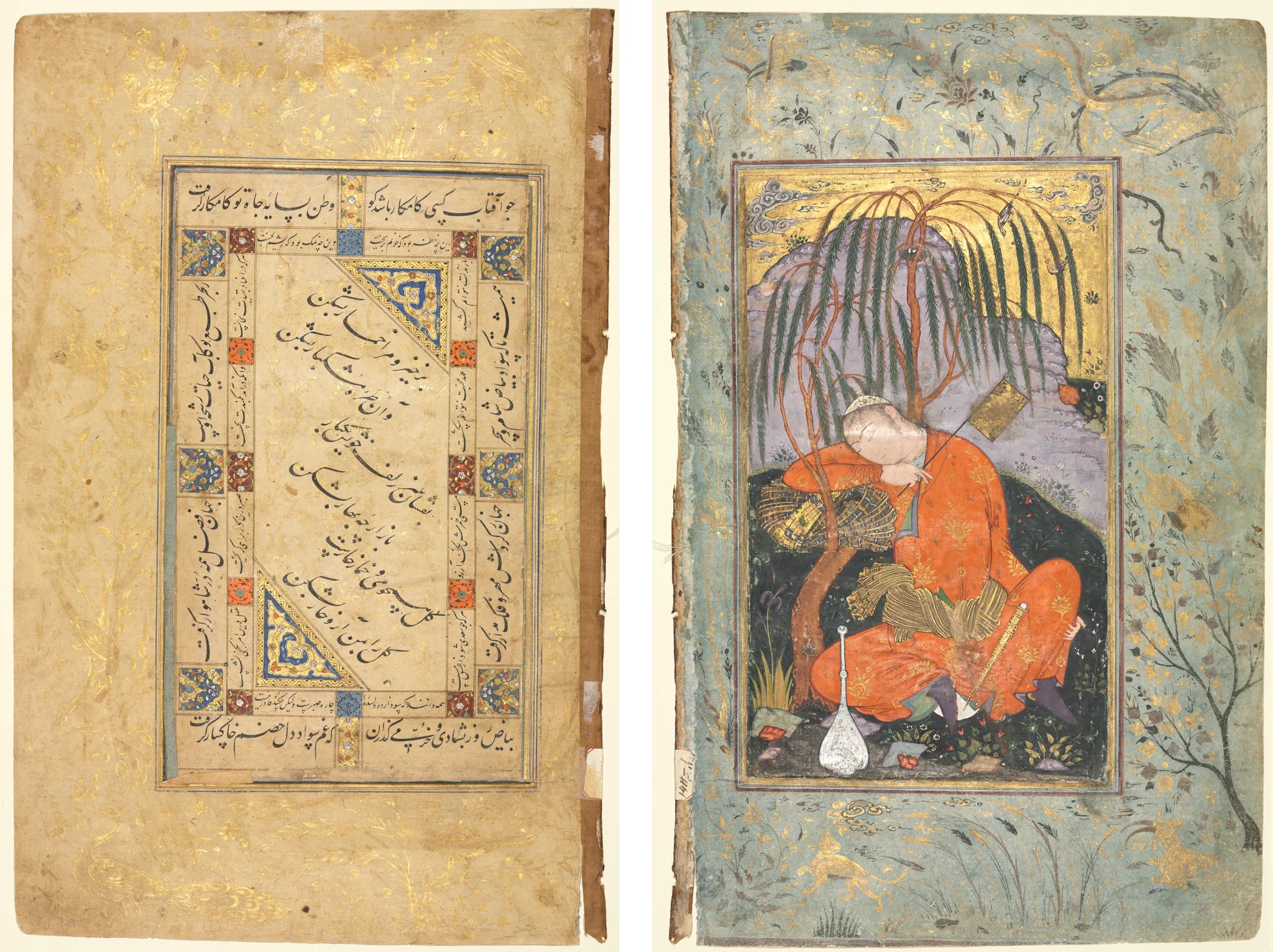
ZoomPersian Couplets (recto); Sleeping Youth (verso)
Riza-yi Abbasi · late 1500s–early 1600s
Fine-art print
Coming soon
- Made to order in 2–4 working days, then 2–5 days, tracked — arrives about 1–2 weeks.
- £5 flat-rate shipping — free over £60. Rolled, worldwide.
- Every order is damage-covered — printed just for you, so no change-of-mind returns.
Collections
Palette
CC0Free to use — public domain.Personal and commercial projects, no attribution required.
Complete the wall
Three prints that hang beautifully together — chosen to share this piece's palette.
£18 each · £54 for all three
Looks similar
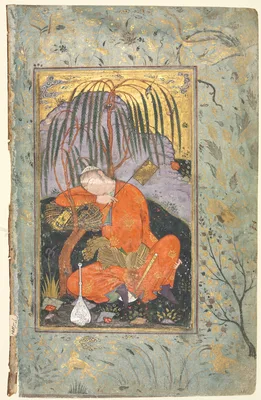
Sleeping Youth (verso), Illustration from a Single Page Manuscript
Riza-yi Abbasi
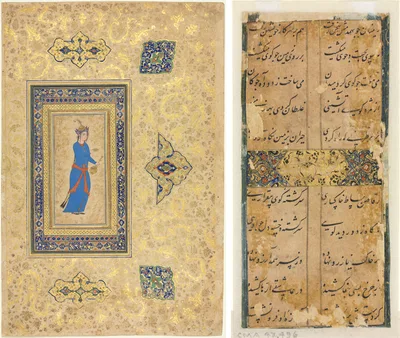
Princess with Wine Bottle and Cup (recto); Persian Verses (verso)
Unknown artist
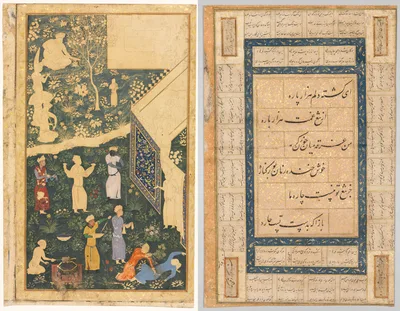
Left side of a double-page album folio: Outside a Royal Encampment (recto) and Calligraphy, Persian Verses (verso)
Kamāl ud-Dīn Behzād
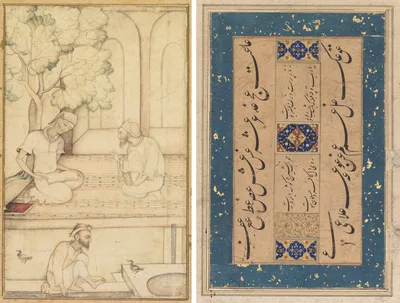
Kabir and Two Followers on a Terrace (recto); Calligraphy (verso)
Unknown artist
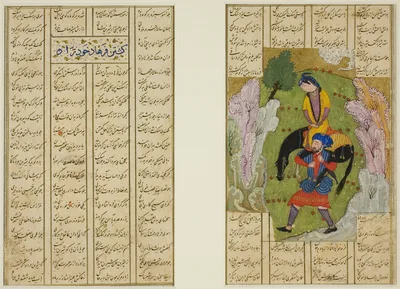
Farhad Carrying Shirin and Her Horse, from a copy of the Khamsa of Nizami
Islamic
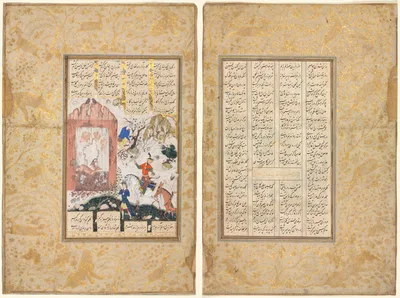
Nushirwan Listens to the Owls (recto); the Story of Nushirwan and his Minister, "The Third Discourse on Diverse Events and Disorder in Life" (verso) from a Khamsa (Quintet) of Nizami (1141–1209)
Unknown artist
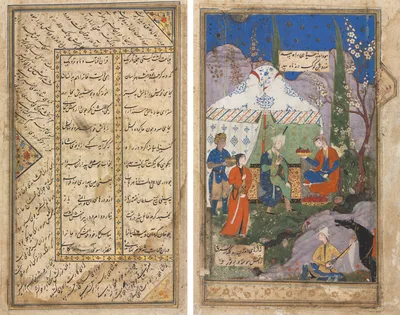
An Episode from the Story of the Sasanian King Khusrau and His Beloved Shirin, from a Khamsa (Quintet) of Nizami (1141–1209) (verso); Persian verses from a Haft Awrang (Seven Thrones) of Jami (d. 1492) (recto)
Unknown artist
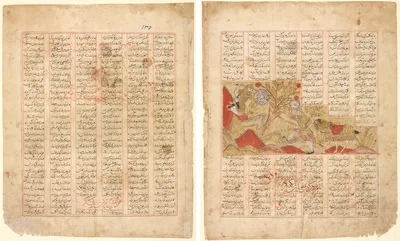
The Tale of the Twelve Faces. "Bizhan Addresses the Army": Illustration from the Firdausi Shahnama (recto); The Tale of the Twelve Faces. "The Warriors Engage in Combat": Illustration from the Firdausi Shahnama (verso)
Unknown artist
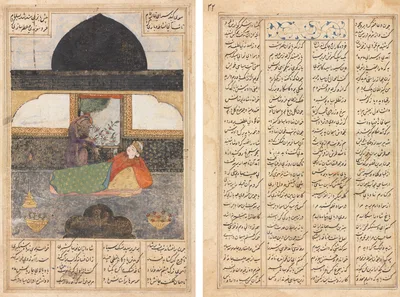
Bahram Gur Visits the Princess of India in the Black Pavilion, Illustration and Text, Persian Verses (recto); Bahram Gur Visits the Princess of India, Text Page, Persian Verses (verso)
Unknown artist
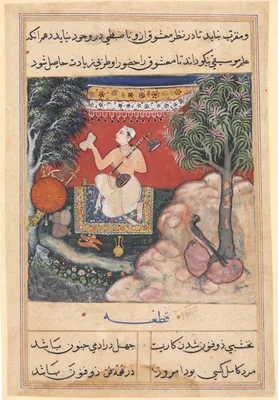
The origin of music from a fabulous bird of India which had seven holes in its beak, from a Tuti-nama (Tales of a Parrot): Fourteenth Night
Unknown artist
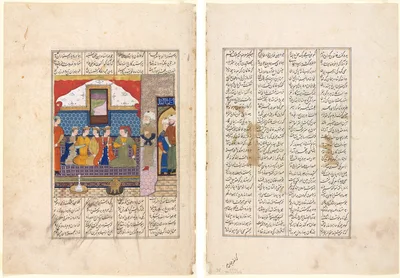
Nushirwan Sends Mihran Sitad to Fetch the Daughter of the King of China (Recto); The Forty-Eighth Year of Nushirwan's Reign. The Combat of the Khaqan of China with the Haithalians (Verso)
Unknown artist
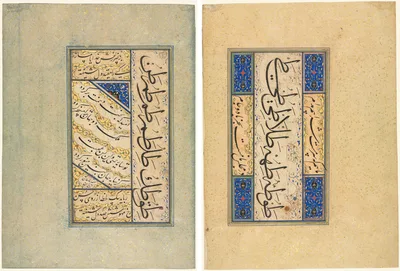
Persian Quatrains (Rubayi) and Calligraphic Exercises (recto); Persian Verse (khamriyya) (verso)
Sultan Muhammad Khandan