The Parrot's Tales
Fables from the Tuti-nama, spun page by jewelled page.
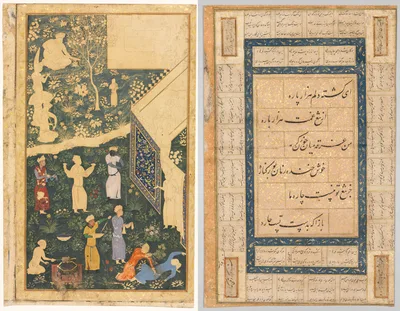
Left side of a double-page album folio: Outside a Royal Encampment (recto) and Calligraphy, Persian Verses (verso)
Kamāl ud-Dīn Behzād · c. 1485
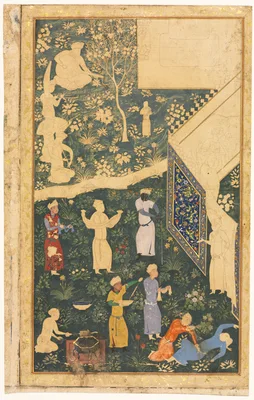
Left side of a double-page album folio: Outside a Royal Encampment (recto)
Kamāl ud-Dīn Behzād · c. 1485
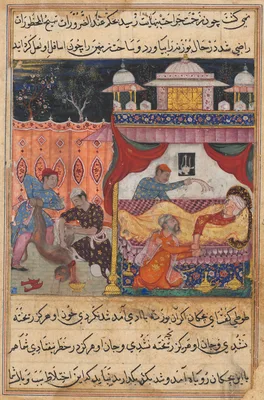
The monkey slain, his blood to be used as medicine for the ailing prince he has bitten, from a Tuti-nama (Tales of a Parrot): Fifth Night
Basawan · c. 1560
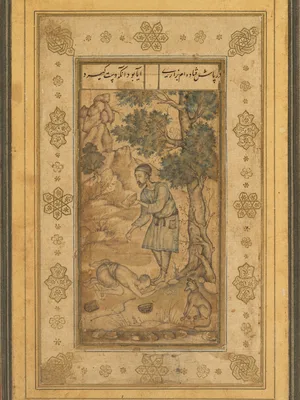
A mendicant bowing before a holy man, from the Prince Salim Album
Basawan · c. 1585; inner border added in Allahabad c. 1602; outer border added probably 1900s
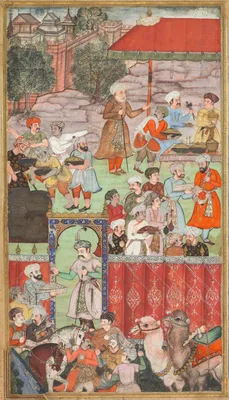
A feast for Babur hosted by his half-brother Jahangir Mirza in Ghazni in May 1505, from a Babur-nama (Memoirs of Babur)
Basawan · c. 1589; outer margins added c. mid-1900s
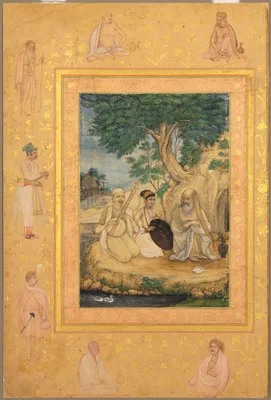
Prince and ascetics, from the Late Shah Jahan Album
Govardhan · c. 1630
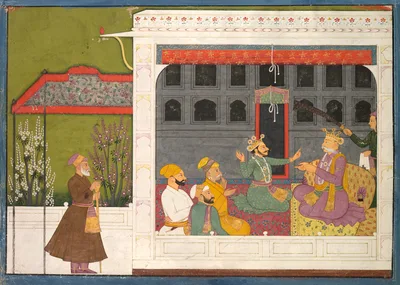
Shishupala arguing with Rukmini’s father, Bhishmaka, from a Rukmini Haran
Mola Ram · c. 1800
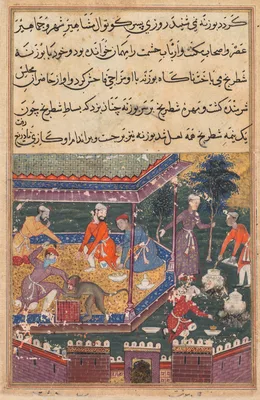
The wounded monkey bites the hand of the prince, his chessmate, in the presence of guests, from a Tuti-nama (Tales of a Parrot): Fifth Night
Daswanth · c. 1560
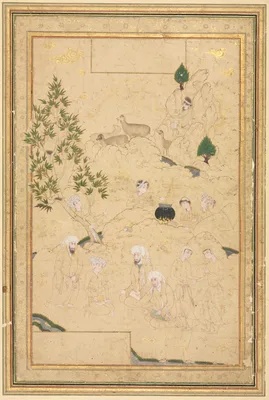
Picnic in the Mountains; Single Page Illustration
Muhammadi · c. 1550–1600
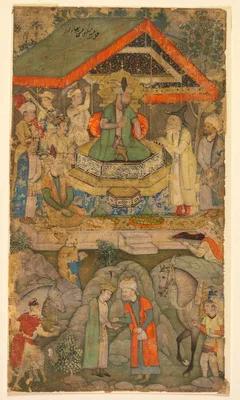
An Ambassador before Humayun
Miskina · c. 1610
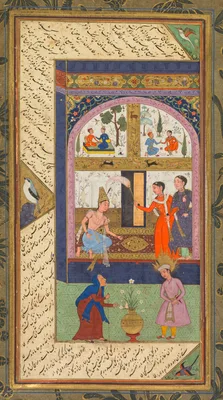
Folios A and B from the "Five Treasures" (Panj Ganj) of Jami
Mushfiq · 1520–1607
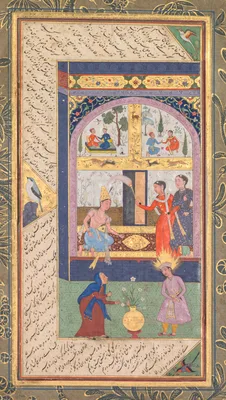
Zulaykha in her palace and as an elderly woman with Joseph (recto), from a Panj Ganj (Five Treasures) of Abd al- Rahman Jami (Persian, 1414–1492)
Mushfiq · 1603–7
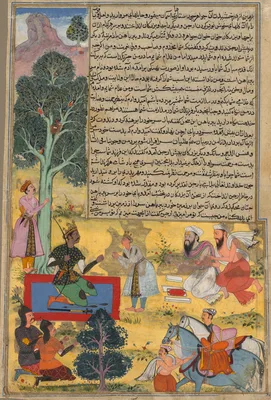
Vabhruvahana Approaches Arjuna, page from the Khan Khanan's Razm-nama
Sur Das Gujarati · c. 1610?–17
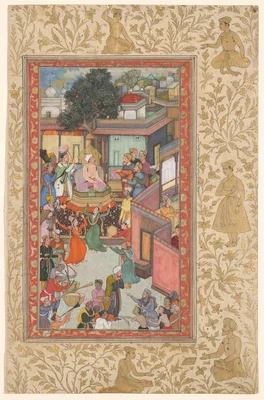
Circumcision ceremony for Akbar’s sons, painting 126 from an Akbar-nama (Book of Akbar) of Abu’l Fazl (Indian, 1551–1602)
Dharam Das · c. 1602–3
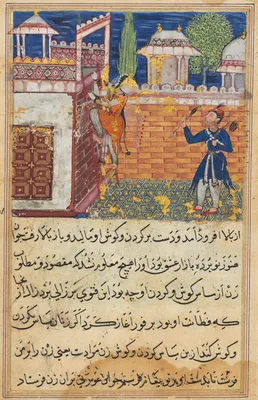
The deceitful wife returns to her terrace after caressing her lover, from a Tuti-nama (Tales of a Parrot): Eighth Night
Shravana · c. 1560
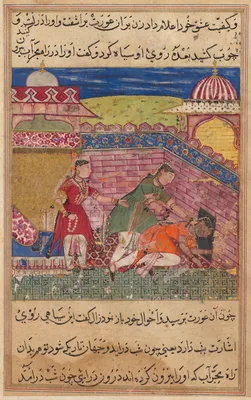
The deceitful wife ejects the procuress after blackening her face, from a Tuti-nama (Tales of a Parrot): Eighth Night
Shravana · c. 1560
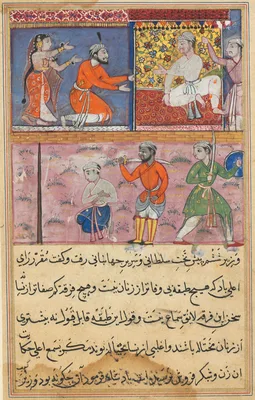
The prince sent back to the place of execution for the sixth time, from a Tuti-nama (Tales of a Parrot): Eighth Night
Suraju · c. 1560
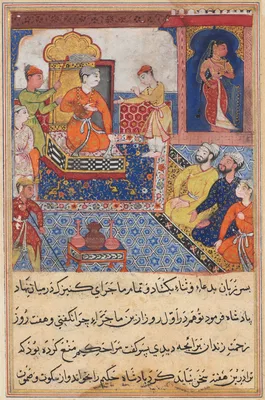
The young prince recounts his experiences to his father, the king, from a Tuti-nama (Tales of a Parrot): Eighth Night
Suraju · c. 1560
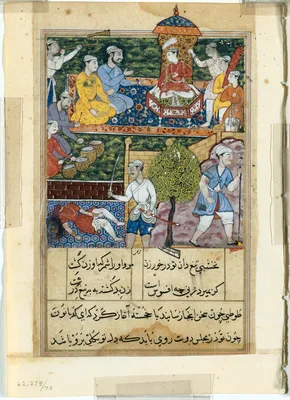
The young prince is crowned and the wicked handmaiden is executed, from a Tuti-nama (Tales of a Parrot): Eighth Night
Suraju · c. 1560
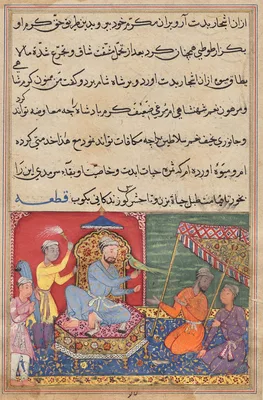
The parrot brings a fruit from the Tree of Life to the king of Syria, from a Tuti-nama (Tales of a Parrot): Ninth Night
Lalu · c. 1560
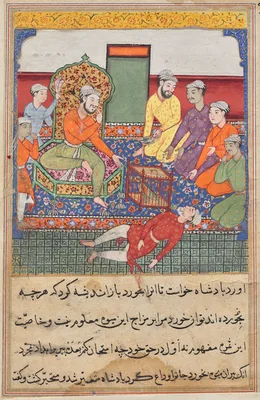
The old man eats of the fruit of the Tree of Life, but drops dead, from a Tuti-nama (Tales of a Parrot): Ninth Night
Lalu · c. 1560
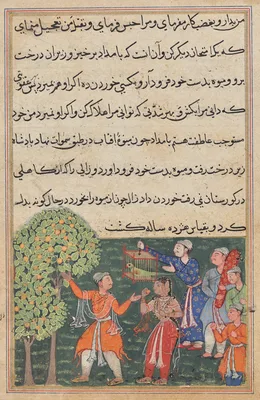
The king plucks fruit from the Tree of Life with his own hands and feeds it to a lady, from a Tuti-nama (Tales of a Parrot): Ninth Night
Suraju · c. 1560
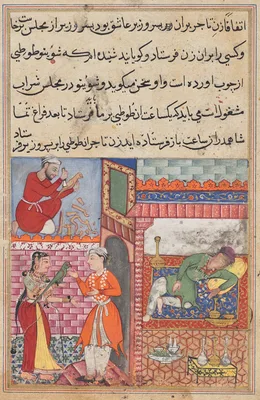
The vizier’s son receives the magic wooden parrot from the wife of the merchant, who is drunk, and has a replica made by a carpenter, from a Tuti-nama (Tales of a Parrot): Tenth Night
Lalu · c. 1560
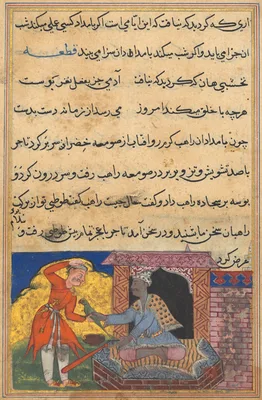
The monk returns the magic parrot to its rightful owner, the merchant, from a Tuti-nama (Tales of a Parrot): Tenth Night
Lalu · c. 1560
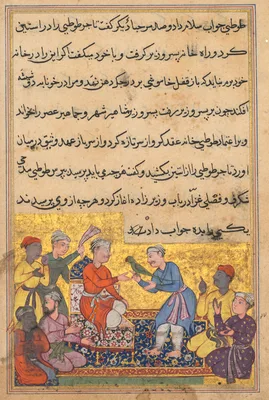
The magic parrot of the merchant talks to the vizier’s son, from a Tuti-nama (Tales of a Parrot): Tenth Night
Lalu · c. 1560
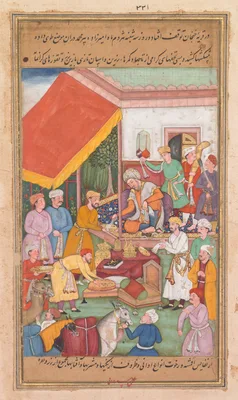
Timur distributes gifts from his grandson, the Prince of Multan, from a Zafar-nama (Book of Victories)
Shravana · 1598–1600
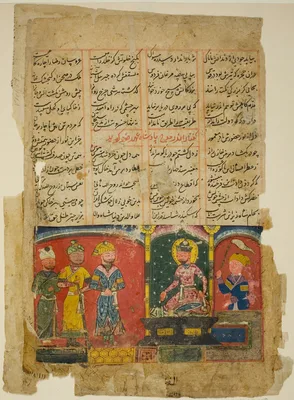
Amir Khusrau Dedicates His Poem to Sultan Ala al-Din Khalji, page from the Quintet (Khamsa) of Amir Khusraw Dehlavi
Unknown artist · Delhi Sultanate period (1206-1526) mid–15th century
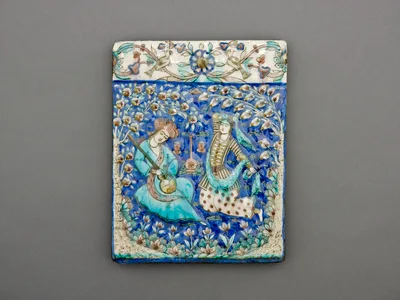
Tile with Musician and Dancer
Islamic · Qajar dynasty (1796–1925), 19th century
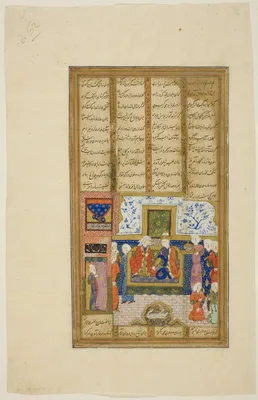
Zal and Rudaba in a Palace, page from a copy of the Shahnama of Firdausi
Islamic · Timurid dynasty (ca. 1370–1507), 1480/90
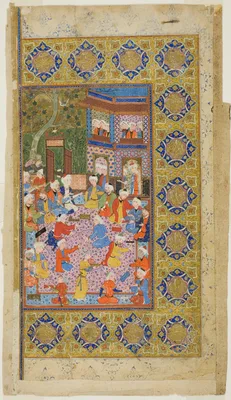
Courtyard of a Palace
Islamic · Safavid dynasty (1501–1722), 16th century
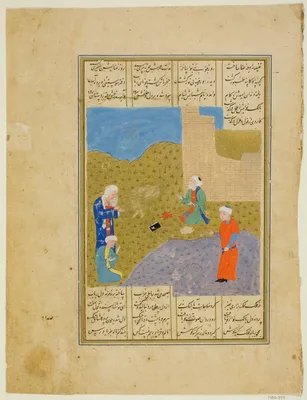
Old Man Attended by Visitors
Unknown artist · 16th Century
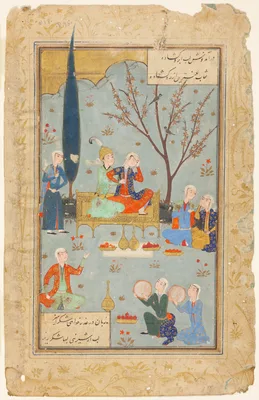
Khosrow and Shirin in a Garden, a Scene from the Khamsa of Nizami
Islamic · Safavid Dynasty (1501-1736), late 16th/early 17th century
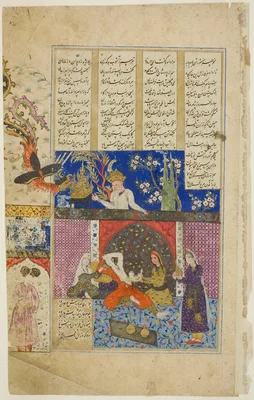
The Birth of Rustam, page from a copy of the Shahnama of Firdausi
Islamic · Safavid dynasty (1501–1722)، dated c.1620
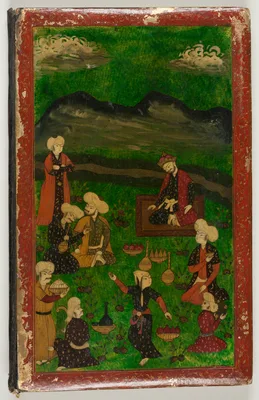
Manuscript of Kulliyat (Complete Works) by Sa'di with Lacquered Cover
Islamic · Safavid Dynasty (1501-1736), 17th century
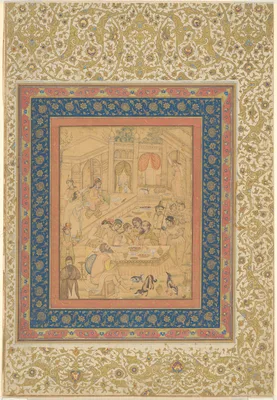
European Banquet Scene (or The Marriage Feast at Cana?)
Mughal · Mughal period, c. 1600
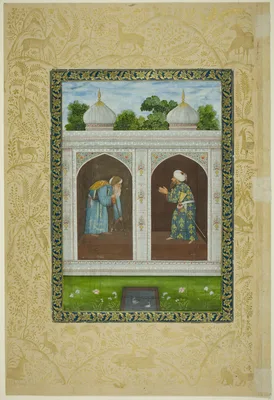
Album Page with Two Sheikhs
Mughal · Safavid dynasty (1501-1722) and Mughal empire (1526-1857), 16th/17th century
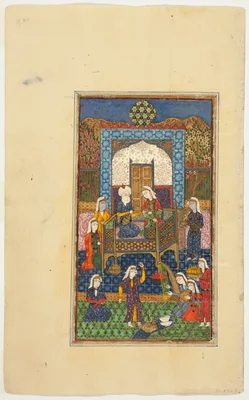
Page from a Manuscript of Kulliyat (Complete Works) by Sa'di
Islamic · Safavid Dynasty (1501-1736), 17th century
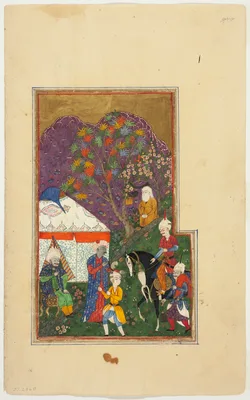
Page from a Manuscript of Kulliyat (Complete Works) by Sa'di
Islamic · Safavid Dynasty (1501-1736), 17th century
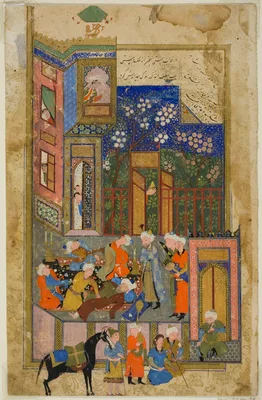
Judge (Qazi) of Hamadan in a Drunken State, a scene from the Gulistan of Sa'di
Unknown artist · about 1550
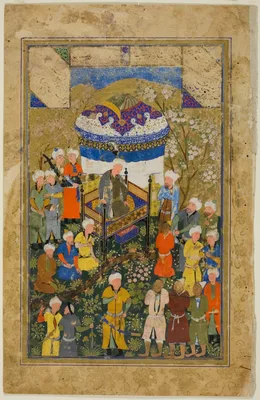
Chained Prisoners are Brought Before a King, a scene from the Gulistan of Sa'di
Unknown artist · c. 1550
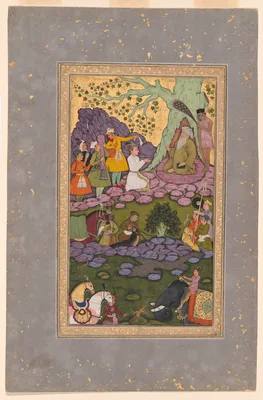
Prince Visiting an Ascetic during a Hunt
Unknown artist · Mughal dynasty (1526-1857), c. 1625-1650
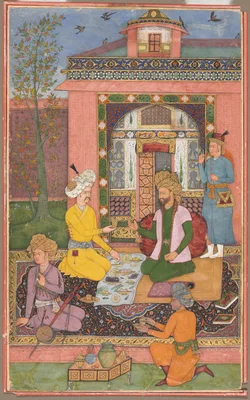
A Royal Picnic on a Terrace
Muhammad Ali · c. 1620
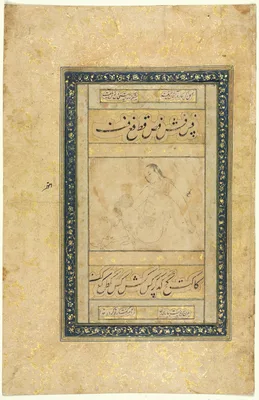
Sketch of a Young Man and Persian Calligraphy
Unknown artist · 1630–50
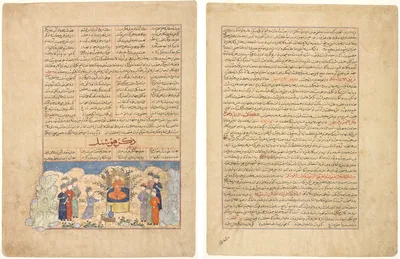
The Story of Hushang (recto), Illustration and text (Persian Prose) from Majmac al-Tavarikh (A Compendium of Histories) of Hafiz-i Abru; Text Page, Persian Prose, (verso), from Majmac al-Tavarikh (A Compendium of Histories) of Hafiz-i Abru
Unknown artist · early 1400s
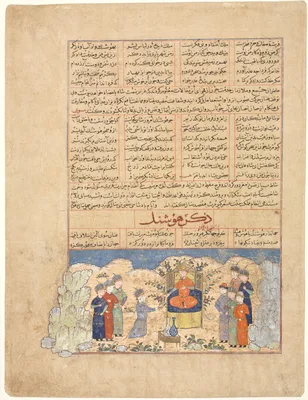
The Story of Hushang, from a Majma al-tavarikh (A Compendium of Histories) of Hafiz-i Abru (recto)
Unknown artist · 1425–50
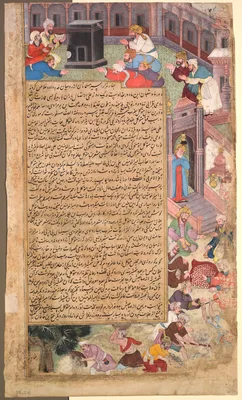
Page of disasters, from the Tarikh-i Alfi (History of a Thousand Years)
Unknown artist · c. 1595
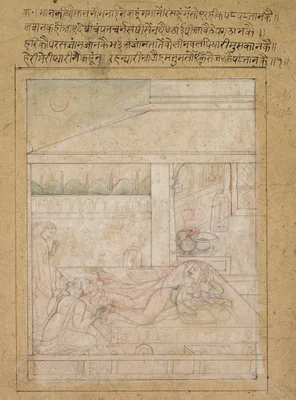
Radha and Krishna's reconciliation
Unknown artist · c. 1790–1800
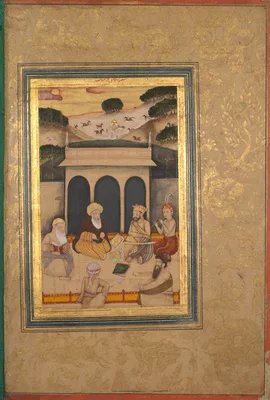
Nobleman Visiting Saint at his Shrine
Unknown artist · 1600s–1700s
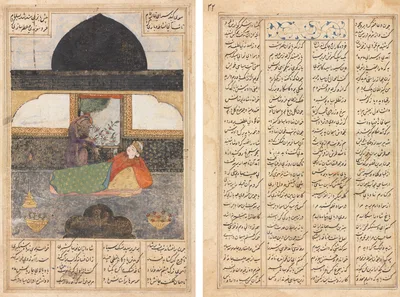
Bahram Gur Visits the Princess of India in the Black Pavilion, Illustration and Text, Persian Verses (recto); Bahram Gur Visits the Princess of India, Text Page, Persian Verses (verso)
Unknown artist · c. 1400–1410
![Bahram Gur Visits the Princess of India in the Black Pavilion (recto): Illustration and Text, Persian Verses, from a manuscript of the Khamsa of Nizami, Haft Paykar [Seven Portraits]](https://pub-21d96e9fd06c4141be748e62e20111a9.r2.dev/thumb/cleveland/123987.webp)
Bahram Gur Visits the Princess of India in the Black Pavilion (recto): Illustration and Text, Persian Verses, from a manuscript of the Khamsa of Nizami, Haft Paykar [Seven Portraits]
Unknown artist · c. 1400–1410
Showing 50 of 226 works