 Zoom
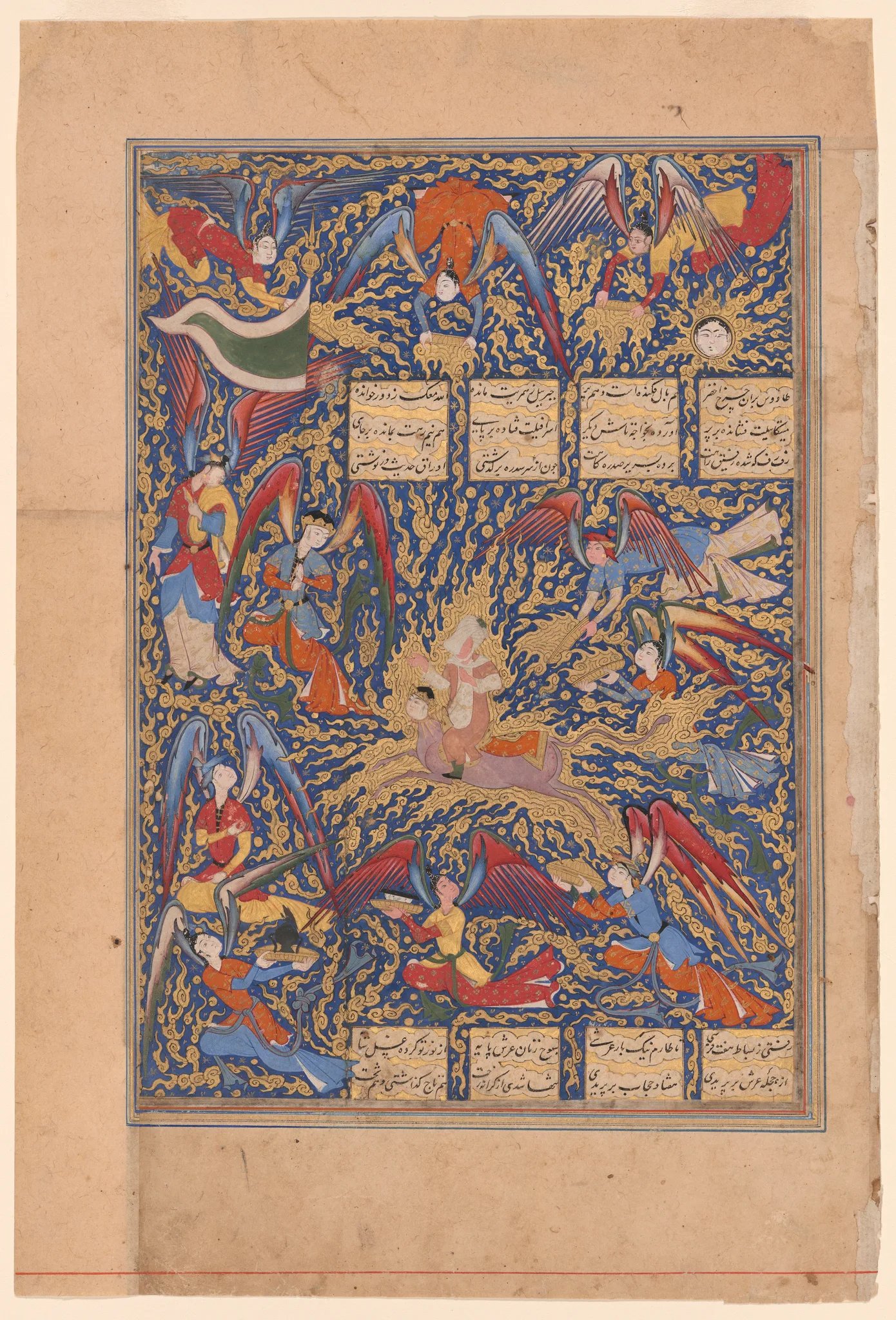
ZoomThe Ascent of the Prophet to Heaven, Page from the Khamsa of Nizami
Islamic · Safavid dynasty (1501–1722), c. 1600
Fine-art print
Coming soon
- Made to order in 2–4 working days, then 2–5 days, tracked — arrives about 1–2 weeks.
- £5 flat-rate shipping — free over £60. Rolled, worldwide.
- Every order is damage-covered — printed just for you, so no change-of-mind returns.
Collections
Palette
CC0Free to use — public domain.Personal and commercial projects, no attribution required.
Complete the wall
Three prints that hang beautifully together — chosen to share this piece's palette.
£18 each · £54 for all three

Looks similar
Episodes from the Reigns of Khusrau Parviz and Nushirwan from a Shahnama (Book of Kings) of Firdausi (940–1019 or 1025)
Unknown artist
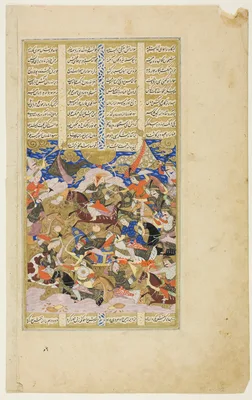
Manuchehr Kills Tur, Manuscript from Shahnama
Unknown artist
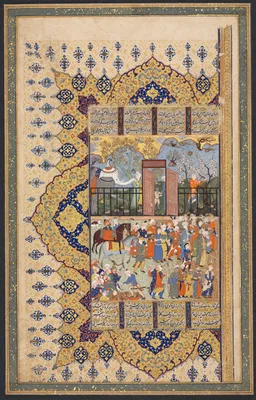
King Luhrasp Ascends the Throne: a Processon Arrives at Court, recto of the left folio of a double-page composition from a Shahnama (Book of Kings) of Firdausi (940-1019 or 1025)
Unknown artist
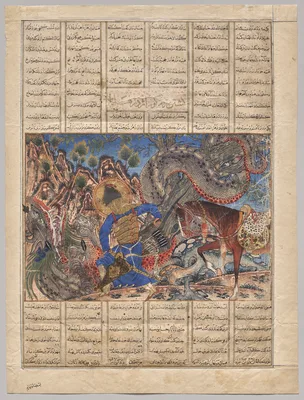
Bahram Gur Slays a Dragon (verso), from a Shahnama (Book of Kings) of Firdausi (940–1019 or 1025), known as the Great Mongol Shahnama
Unknown artist
![Nushirwan Listens to the Owls (recto): Illustration and Text, Persian Verses, from a Manuscript of the Khamsa of Nizami, Makhzan al-Asrar [Treasure of Secrets]](https://pub-21d96e9fd06c4141be748e62e20111a9.r2.dev/thumb/cleveland/123990.webp)
Nushirwan Listens to the Owls (recto): Illustration and Text, Persian Verses, from a Manuscript of the Khamsa of Nizami, Makhzan al-Asrar [Treasure of Secrets]
Unknown artist
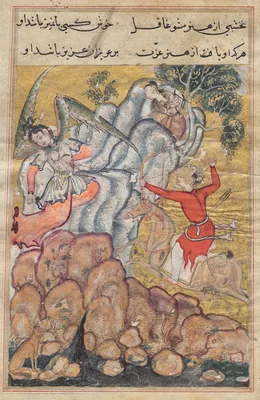
The third suitor, who is an archer, shoots the wicked fairy who has imprisoned Zuhra. He rides on a magic horse prepared by the second suitor and is led to the spot by the divining prowess of the first, from a Tuti-nama (Tales of a Parrot): Thirty-fourth Night
Unknown artist
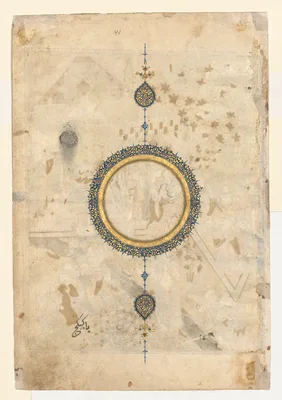
Shamsa (recto) from right folio from a double-page frontispiece of a Shahnama (Book of Kings) of Firdausi (940–1019 or 1025)
Unknown artist
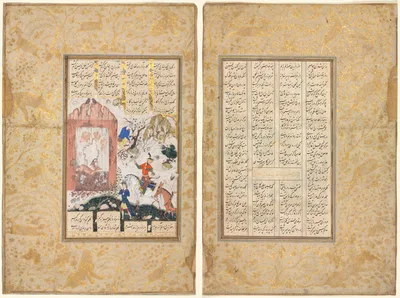
Nushirwan Listens to the Owls (recto); the Story of Nushirwan and his Minister, "The Third Discourse on Diverse Events and Disorder in Life" (verso) from a Khamsa (Quintet) of Nizami (1141–1209)
Unknown artist
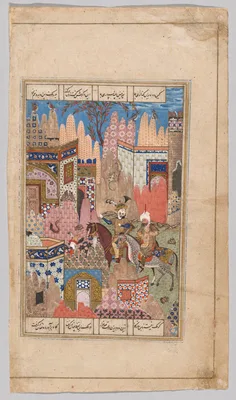
King Anushirwan and the Owls, from the Khamsa of Nizami
Islamic
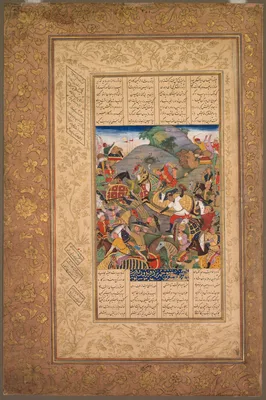
Battle between Manuchihr and Tur, from a Shah-nama (Book of Kings) of Firdausi (Persian, c. 934–1020)
Unknown artist
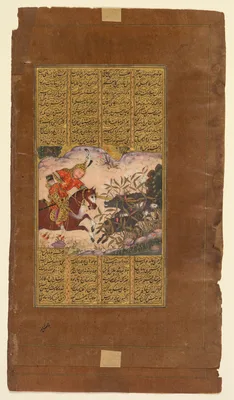
Bijan killing the wild boars of Irman, from a Shah-nama (Book of Kings) of Firdausi (Persian, about 934–1020) (verso)
Unknown artist
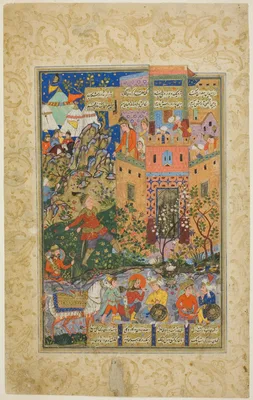
Zal Climbing to Rudaba, page from a copy of the Shahnama of Firdausi
Islamic