Persian Script
Qur'anic and Persian pages where calligraphy is the art.
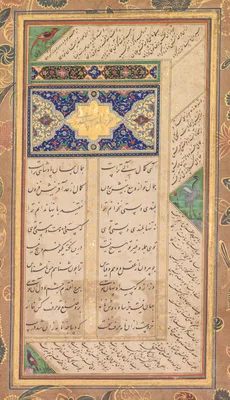
Illuminated page (verso), from a Panj Ganj (Five Treasures) of Abd al- Rahman Jami (Persian, 1414–1492) with two Persian masnavis: Yusuf va Zulaykha (Joseph and Zulaykha) and Khirad-nama-i Iskandari (Alexander’s Book of Wisdom)
Mushfiq · 1603–7
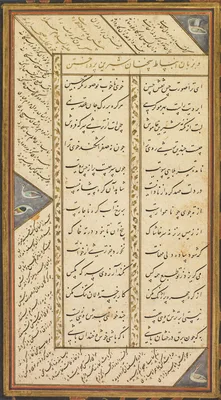
Page from the Panj Ganj (Five Treasures) of Abd al-Rahman Jami (Persian, 1414–1492), with two Persian masnavis (narrative poems): Yusuf va Zulaykha (Joseph and Zulaykha) and Subhat al-abrar (Rosary of the Righteous)
Mushfiq · Text c. 1500–1520; painting, borders, and illuminations added 1603–7 Text copied by Sultan-Ali Mashhadi (Persian, active early 1500s) for Badi al-Zaman Mirza, ruler of Herat Painted insets and borders by Mushfiq (Indian, active 1580s–early 1600s) Text copied in Herat Painting, borders, and illuminations made in the Deccan for Mughal minister Abd al-Rahim the Khan Khanan
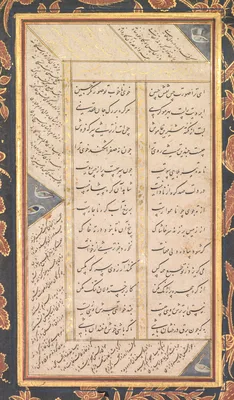
Folio B: Folio from the "Five Treasures" (Panj Ganj) of Jami (recto)
Mushfiq · 1520–1607
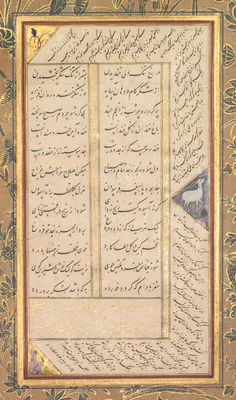
Page from a Panj Ganj (Five Treasures) of Abd al-Rahman Jami (Persian, 1414–1492), with two Persian masnavis: Yusuf va Zulaykha (Joseph and Zulaykha) and Subhat al-abrar (Rosary of the Righteous) (verso)
Mushfiq · 1520–1607
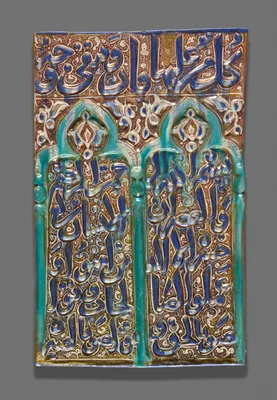
Tile with a Double-Arched Prayer Niche (Mihrab)
Islamic · Ilkhanid dynasty (1256–1353), 13th century
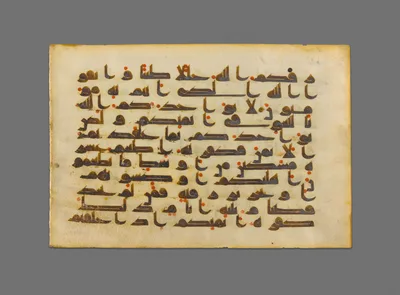
Page from a Copy of The Qur'an
Islamic · 9th/10th century
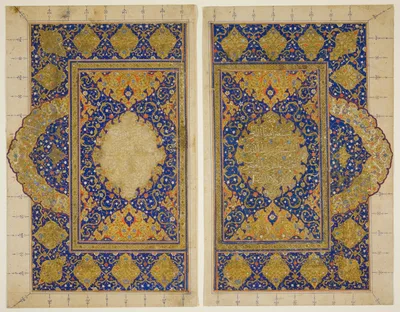
Double Page from the Qur'an
Islamic · Safavid dynasty (1501–1722), 16th century
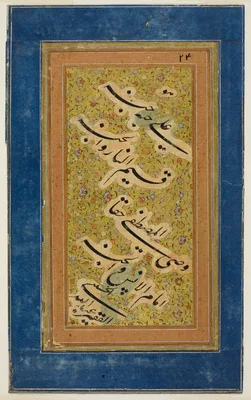
Poetry Fragment (Qit'a) written in Nasta'liq Script
Islamic · Safavid dynasty (1501–1722)
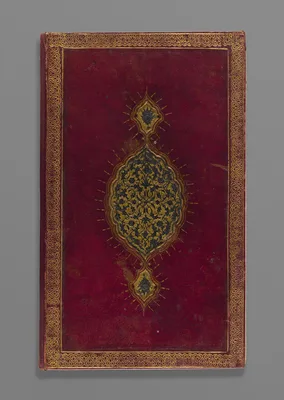
Divan of Hafiz
Islamic · Safavid dynasty (1501–1722), 16th century, dated c. 1540–1550
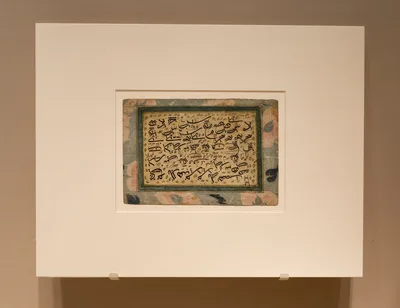
Calligraphic Exercise Showing Measurements of Individual Letters
Unknown artist · 18th/19th century
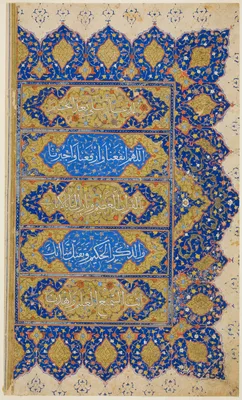
Right-Hand Page from the Qur'an
Islamic · Safavid dynasty (1501–1722)، 16th century
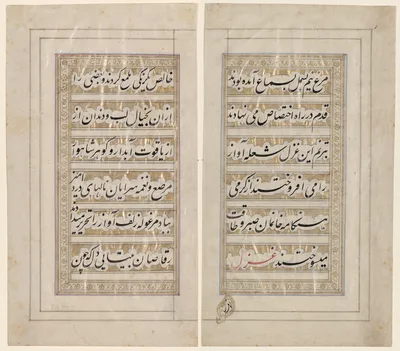
Page from the Poem of Beauty and Love
Unknown artist · 1848
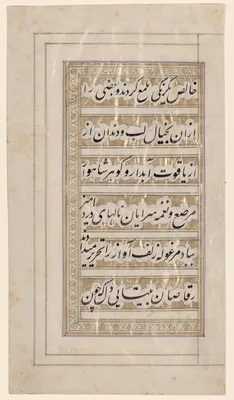
Page from the Poem of Beauty and Love
Unknown artist · 1848
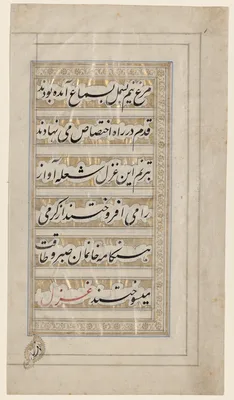
Page from the Poem of Beauty and Love
Unknown artist · 1848
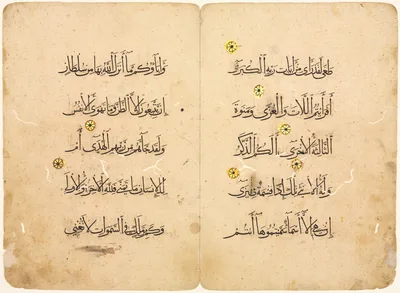
Qur'an Manuscript Folio
Unknown artist · 1300s–1400s
![Qur'an Manuscript Folio (recto; verso) [Right side of Bifolio]](https://pub-21d96e9fd06c4141be748e62e20111a9.r2.dev/thumb/cleveland/114221.webp)
Qur'an Manuscript Folio (recto; verso) [Right side of Bifolio]
Unknown artist · 1300s–1400s
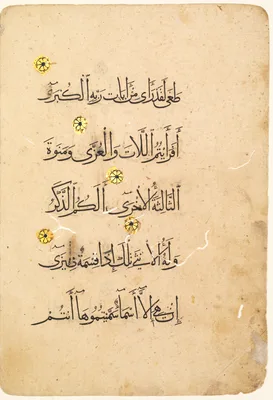
Qur'an Manuscript Folio (verso) (right side of bifolio)
Unknown artist · 1300s–1400s
![Qur'an Manuscript Folio (recto; verso) [Left side of Bifolio]](https://pub-21d96e9fd06c4141be748e62e20111a9.r2.dev/thumb/cleveland/114224.webp)
Qur'an Manuscript Folio (recto; verso) [Left side of Bifolio]
Unknown artist · 1300s–1400s
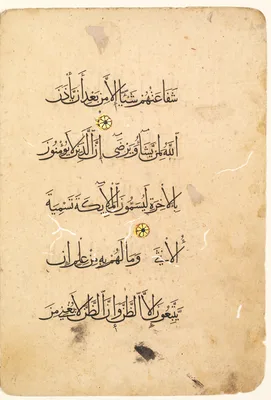
Qur'an Manuscript Folio. Left Folio of a Bifolio (verso)
Unknown artist · 1300s–1400s
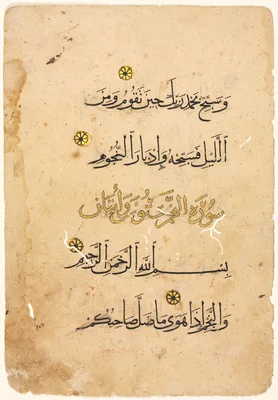
Qur'an Manuscript Folio
Unknown artist · 1300s–1400s
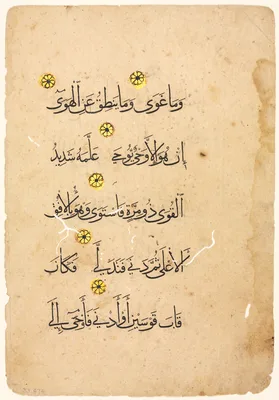
Qur'an Manuscript Folio (verso)
Unknown artist · 1300s–1400s
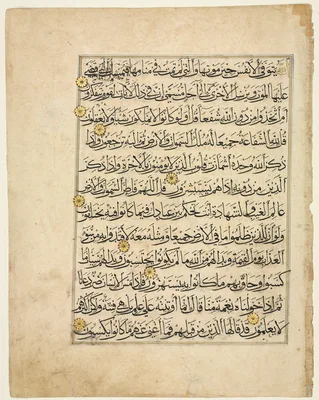
Qur'an Manuscript Folio
Unknown artist · 1300s
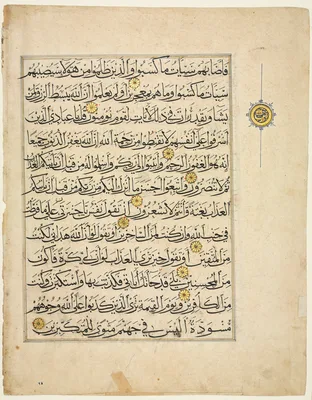
Qur'an Manuscript Folio (verso)
Unknown artist · 1300s
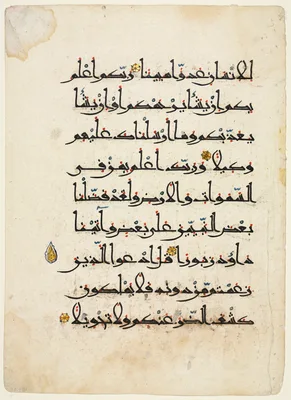
Leaf from a Qur'an
Unknown artist · 1000s-1100s
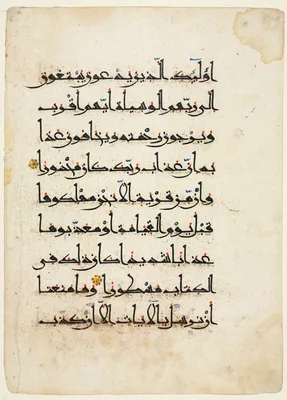
Leaf from a Qur'an (verso)
Unknown artist · 1000s-1100s
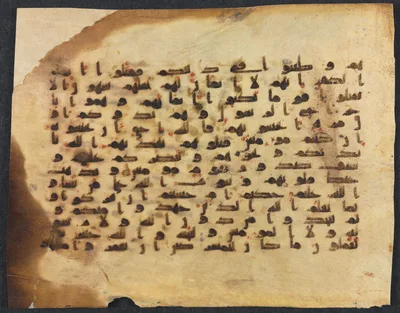
Qur'an Manuscript Folio (recto)
Unknown artist · 800s-900s
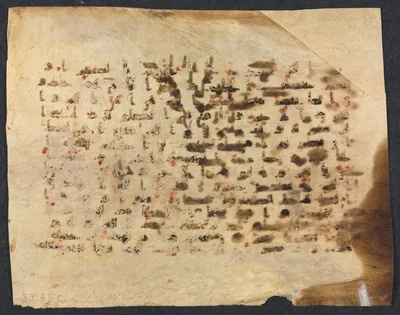
Qur'an Manuscript Folio (verso)
Unknown artist · 800s-900s
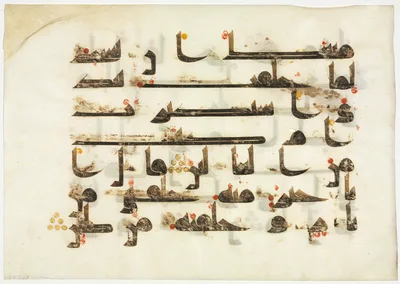
Folio from a Qur'an
Unknown artist · 800s
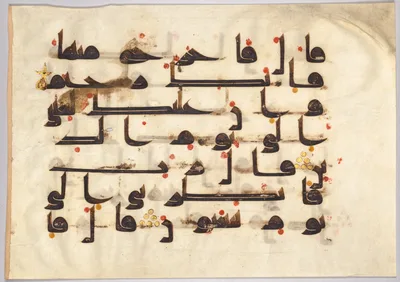
Folio from a Qur'an (verso)
Unknown artist · 800s
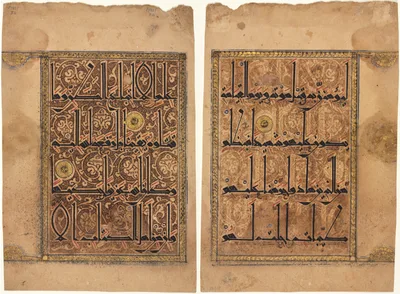
Double-Sided Leaf from a Qur'an
Unknown artist · 1100s
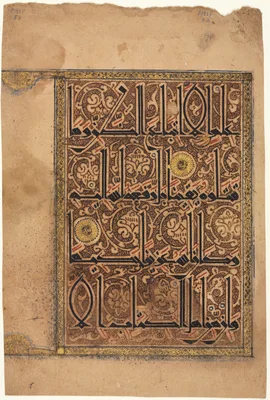
Page from a Qur'an, Sura al-Nisa 4, Verses 157–58
Unknown artist · 1100s
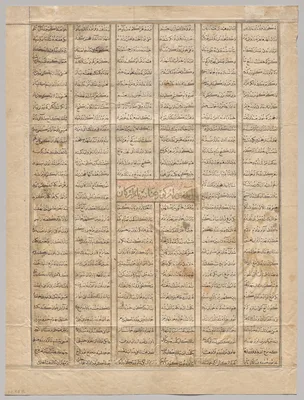
Bahram Gur Arrives at the House of a Merchant, text page (recto), from a Shahnama (Book of Kings) of Firdausi (940–1019 or 1025), known as the Great Mongol Shahnama
Unknown artist · 1330–35
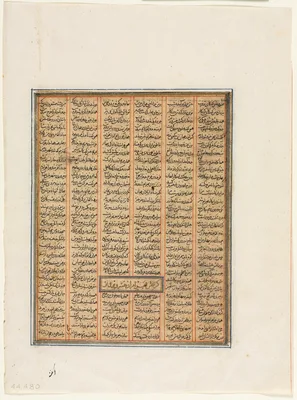
Bahram Chubineh captured by Khusrau Parviz (verso), from a Shahnama (Book of Kings) of Firdausi (940–1019 or 1025)
Unknown artist · c. 1299
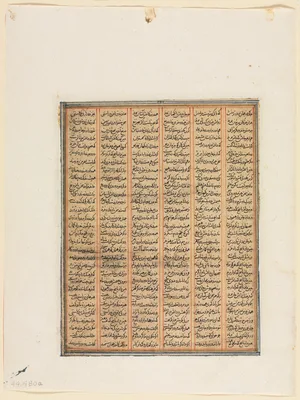
The Reign of Nushirwan, The Combat between the Khan of Chin and the Haitalians (recto) from a Shahnama (Book of Kings) of Firdausi (940–1019 or 1025)
Unknown artist · c.1299
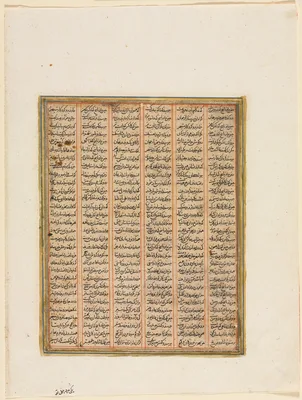
The Reign of Nushirwan, the Combat between the Khan of Chin and the Haitalians (verso) from a Shahnama (Book of Kings) of Firdausi (940–1019 or 1025)
Unknown artist · c.1299
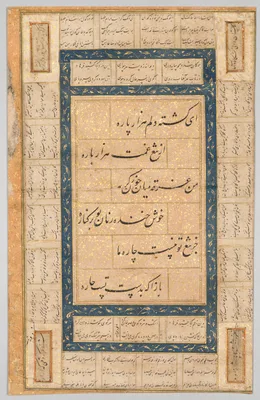
Calligraphy, Persian Verses (verso)
Unknown artist · 1400s
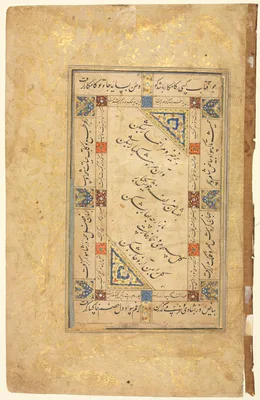
Persian Couplets (recto), Calligraphy, Persian Verses; Single Page Manuscript
Unknown artist · late 1500s–early 1600s
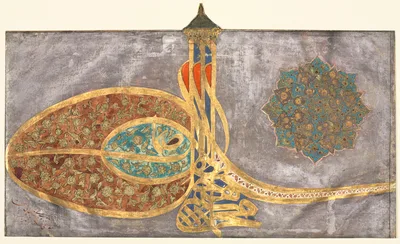
Tughra: Shah Muhammad bin Ibrahim Khan, al-muzaffar daima (Sultan Mehmed, son of Ibrahim Khan, the eternally victorious; Calligraphy (Ottoman Turkish Signature), Single Page Manuscript
Unknown artist · 1648–87
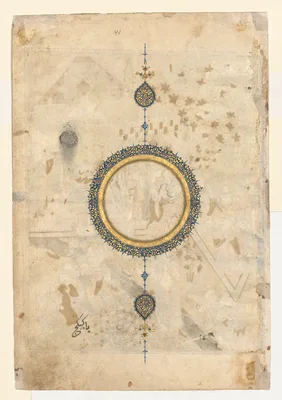
Shamsa (recto) from right folio from a double-page frontispiece of a Shahnama (Book of Kings) of Firdausi (940–1019 or 1025)
Unknown artist · c. 1444
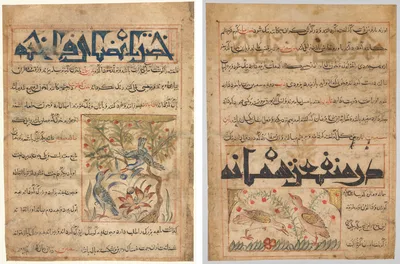
Qualities of Ringdoves (recto); On the Benefits of Quails (verso), from a Persian Manafi‘ al-Hayawan (The Benefits of Animals) of Abu Said Ubaid-Allah ibn Jibrail ibn Bakhtishu (died 1058–68)
Unknown artist · c. 1300
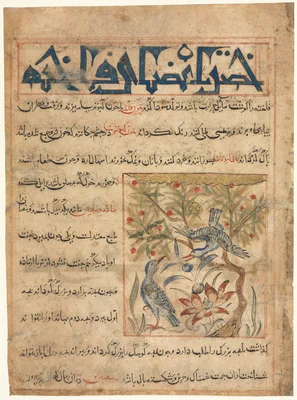
Folio from a Persian Manafi‘ al-Hayawan (The Benefits of Animals) of Abu Said Ubaid-Allah ibn Jibrail ibn Bakhtishu (died 1058–68) (recto)
Unknown artist · c. 1300
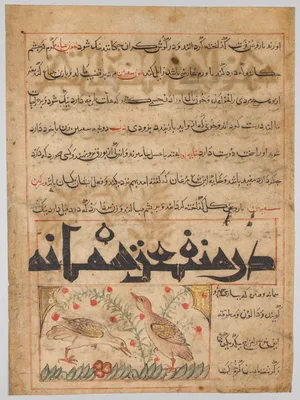
Folio from a Persian Manafi‘ al-Hayawan (The Benefits of Animals) of Abu Said Ubaid-Allah ibn Jibrail ibn Bakhtishu (died 1058–68) (verso)
Unknown artist · c. 1300
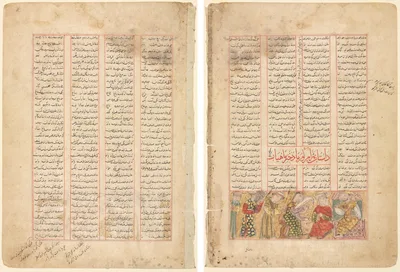
Text Page, Persian Verses (recto); Bahram Gur meets Arzu, the Daughter of Mahiyar (verso)
Unknown artist · c. 1350
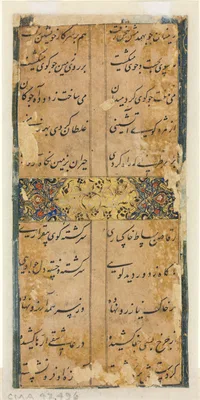
Persian Verses (verso)
Unknown artist · c. 1450–1500
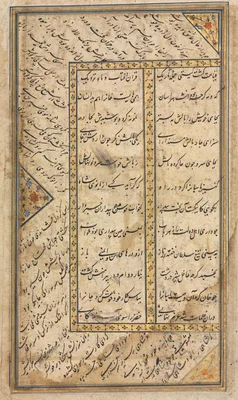
Persian verses from a Haft Awrang (Seven Thrones) of Jami (d. 1492) (recto)
Unknown artist · mid-1500s
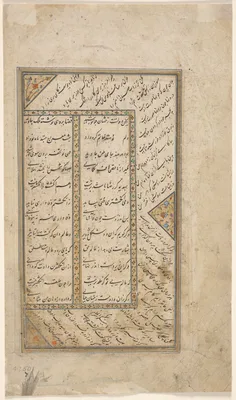
Text Page, Persian Verses (verso) in an Anthology with some verses from Haft Awrang (Seven Thrones) of Jami; The Fifth Throne Yusuf and Zulaykha
Unknown artist · mid-1500s
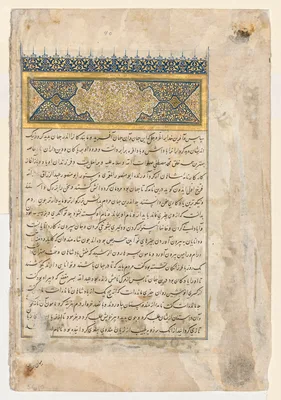
Preface (verso) from a double-page frontispiece of a Shahnama of Firdausi (940-1019 or 1025)
Unknown artist · c. 1444
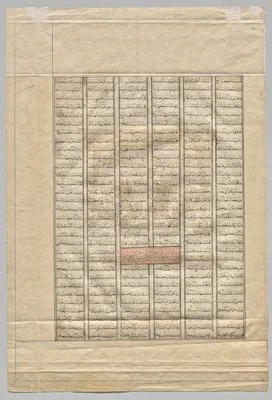
Persian Verses: The Fortieth Year of King Kisra Nushirwan's Reign and the Story of Buzurgmihr (recto) from a Shahnama (Book of Kings) of Firdausi (940–1019 or 1025)
Unknown artist · 1330–35
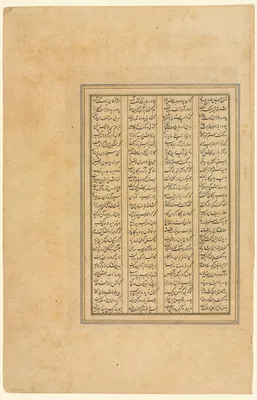
Page from a Shah-nama (Book of Kings) of Firdausi (Persian, about 934–1020)
Unknown artist · c. 1590–1600
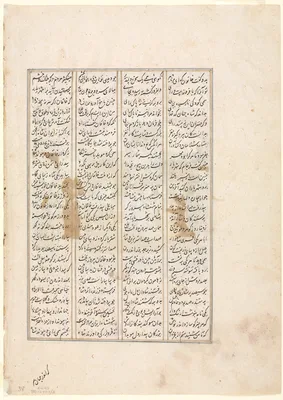
The Forty-Eighth Year of Nushirwan's Reign: the Combat of the Khaqan of China with the Haithalians (verso) from a Shahnama (Book of Kings) of Firdausi (940–1019 or 1025)
Unknown artist · c. 1482
Showing 50 of 71 works